We seek your assistance in promoting various approved cultural activities in whatever medium including literature, performing and visual arts, together with the preservation of movable cultural heritage such as the collections in the house. You may choose to support a specific project or cultural field (for example, supporting publications or other work in cultural fields, or preservation work on the many historically significant images in Professor Clark’s study and elsewhere in the house). Donations to the Manning Clark House Gift Fund are tax-deductible.
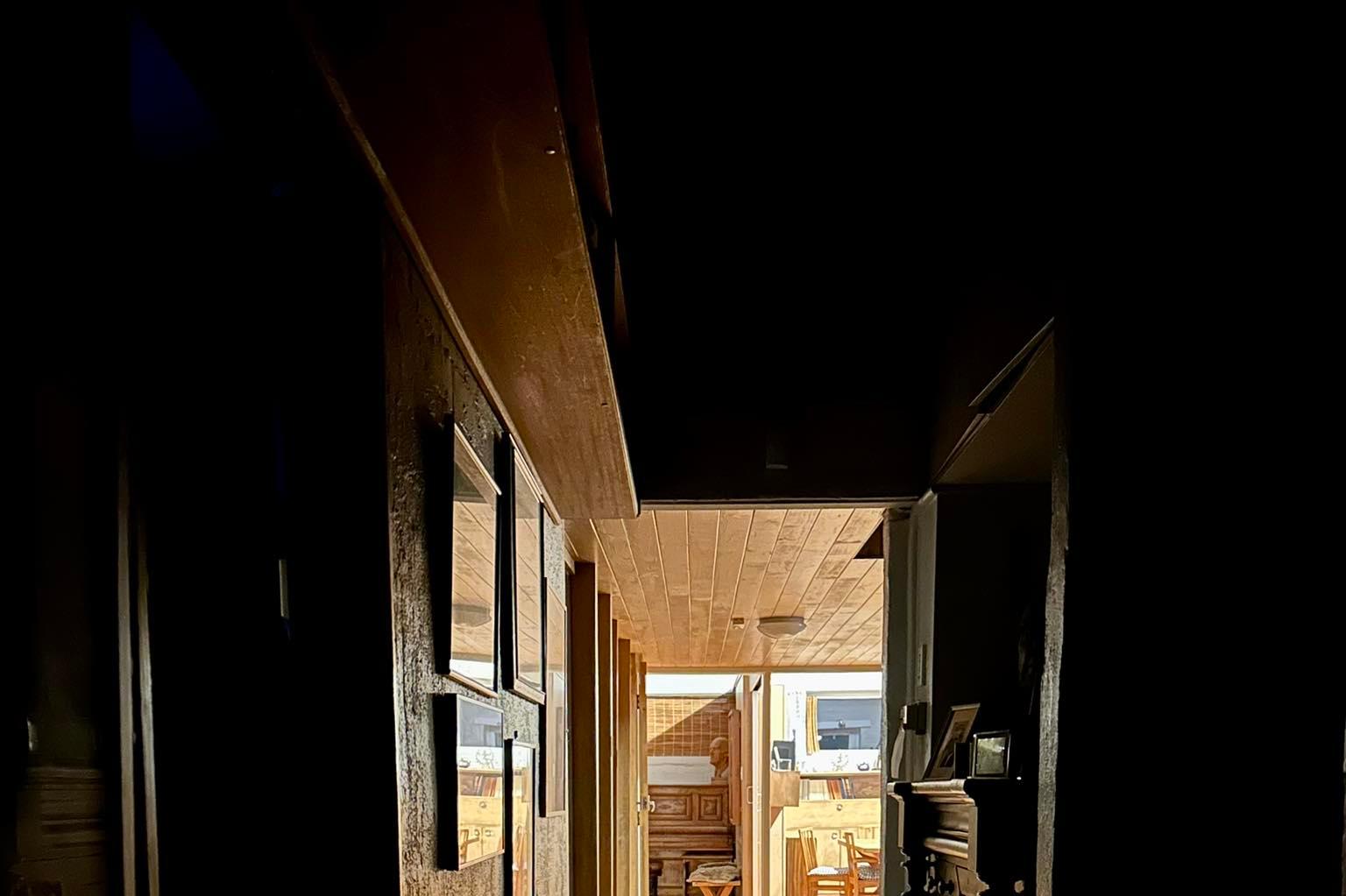
Manning Clark House is a heritage listed property, recognising its significance as a house designed by the eminent architect, Robin Boyd, and its association with one of Australia’s most influential historians. Largely unaltered since construction in 1953, the house retains the distinctive characteristics of Boyd’s modernist practice, adapted to the relatively modest brief of providing a home for Manning and Dymphna Clark’s family and reflecting the social and cultural contexts of their lives in the formative phases of Canberra’s development.
Now managed as a cultural centre and a place for ideas, the house retains the intimacy of a family home, conveying the vitality of those who lived in it.
A recent generous donation has enabled the House to repair and preserve for public viewing some of the significant images in Manning Clark’s study. They capture the more personal, and family-oriented dimensions of the house's connections between individual lives and national contribution. Our current priorities include work on the remaining images in the study, and repair of the 1965 painting by notable Australian artist John Perceval. We encourage your support for the MCHI Cultural Fund to enable us to ensure these links, and these unique objects, are preserved as a vital dimension of the house's connection to the Australian story.’
We seek your assistance in promoting various approved cultural activities in whatever medium, including literature, performing and visual arts, together with the preservation of movable cultural heritage such as the collections in the house. You may choose to support a specific project or cultural field (for example, supporting publications or other work in cultural fields, or preservation work on the many historically significant images in Professor Clark’s study and elsewhere in the house). Donations of $2 or over to the Manning Clark House Gift Fund are tax-deductible.
If you agree to donate in any way, we will recognise your contribution on our website and in our programs, as a vital dimension of the ways in which ‘friends’ of Manning Clark House engage with us and enrich our work.
Preserving the qualities of the house is also a challenge. Manning Clark House Inc, an ACT incorporated association, functions on a voluntary basis with a paid Director/CEO.
Yes
Yes, as soon as your donation is processed.
MCHI acknowledges the traditional custodians of country throughout Australia and their continuing connection to land, sea and community. We pay our respects to them and their cultures and to their elders both past and present.
We seek your assistance in promoting various approved cultural activities in whatever medium including literature, performing and visual arts, together with the preservation of movable cultural heritage such as the collections in the house. You may choose to support a specific project or cultural field (for example, supporting publications or other work in cultural fields, or preservation work on the many historically significant images in Professor Clark’s study and elsewhere in the house). Donations to the Manning Clark House Gift Fund are tax-deductible.
Manning Clark House is a heritage listed property, recognising its significance as a house designed by the eminent architect, Robin Boyd, and its association with one of Australia’s most influential historians. Largely unaltered since construction in 1953, the house retains the distinctive characteristics of Boyd’s modernist practice, adapted to the relatively modest brief of providing a home for Manning and Dymphna Clark’s family and reflecting the social and cultural contexts of their lives in the formative phases of Canberra’s development.
Now managed as a cultural centre and a place for ideas, the house retains the intimacy of a family home, conveying the vitality of those who lived in it.
A recent generous donation has enabled the House to repair and preserve for public viewing some of the significant images in Manning Clark’s study. They capture the more personal, and family-oriented dimensions of the house's connections between individual lives and national contribution. Our current priorities include work on the remaining images in the study, and repair of the 1965 painting by notable Australian artist John Perceval. We encourage your support for the MCHI Cultural Fund to enable us to ensure these links, and these unique objects, are preserved as a vital dimension of the house's connection to the Australian story.’
We seek your assistance in promoting various approved cultural activities in whatever medium, including literature, performing and visual arts, together with the preservation of movable cultural heritage such as the collections in the house. You may choose to support a specific project or cultural field (for example, supporting publications or other work in cultural fields, or preservation work on the many historically significant images in Professor Clark’s study and elsewhere in the house). Donations of $2 or over to the Manning Clark House Gift Fund are tax-deductible.
If you agree to donate in any way, we will recognise your contribution on our website and in our programs, as a vital dimension of the ways in which ‘friends’ of Manning Clark House engage with us and enrich our work.
Preserving the qualities of the house is also a challenge. Manning Clark House Inc, an ACT incorporated association, functions on a voluntary basis with a paid Director/CEO.
Yes
Yes, as soon as your donation is processed.
MCHI acknowledges the traditional custodians of country throughout Australia and their continuing connection to land, sea and community. We pay our respects to them and their cultures and to their elders both past and present.