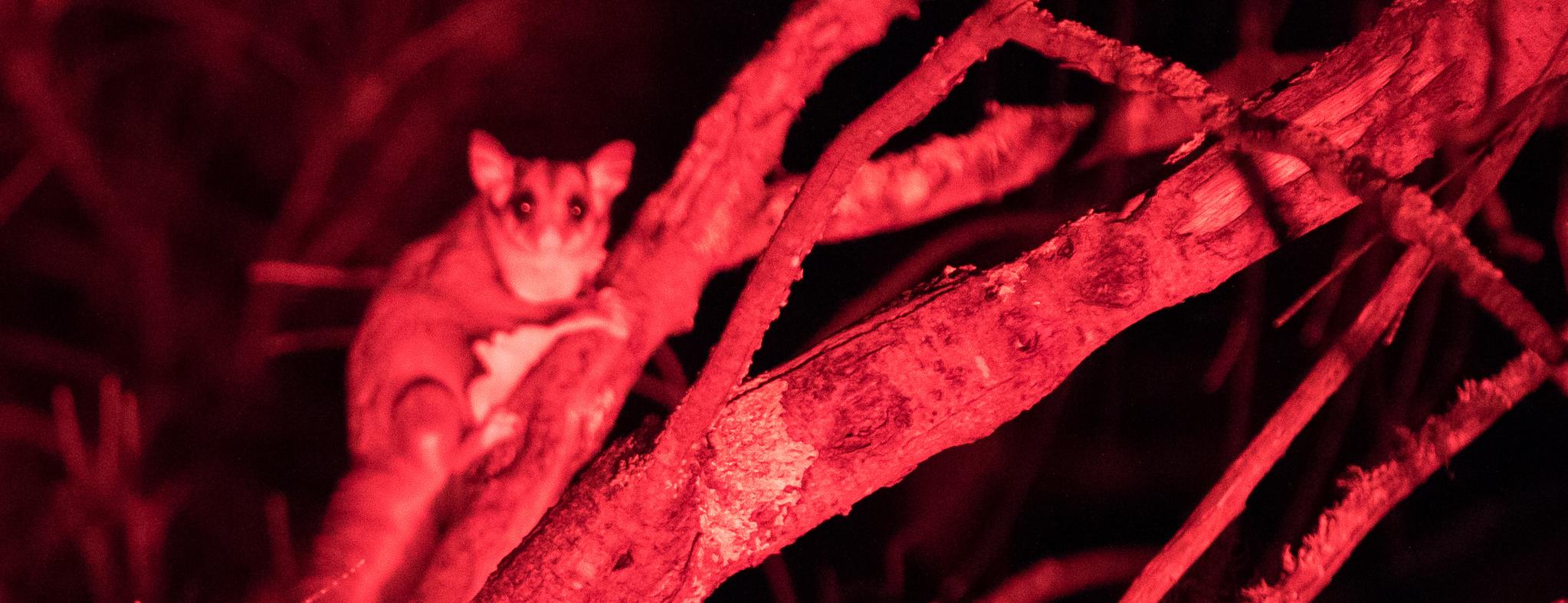
Background
Between 1979-88, 100 gliders were introduced to Tower Hill Wildlife Reserve in the hopes of reestablishing a healthy population. Gliders require tree hollows - cavities in trees that naturally take upwards of 100 years to form - for habitat, and the canopy trees within the reserve were no older than 18 years old from the first reintroduced gliders, artificial nest boxes were essential for the population’s survival.
Now - 44 years on - no hollows have yet formed and the glider population has dwindled to less than 10 known individuals (2023 monitoring results) with only a handful of the boxes previously installed (none more recently than 2008 - 15 years ago) in usable condition. The glider population at Tower Hill is dependent on the addition of more nest boxes.
Why do gliders need nest boxes?
Until natural hollows have enough time to form, nest boxes provide an interim means of habitat, as the gliders aren’t known to make their own dreys or nests from scratch like ringtail possums and many birds. Gliders are nocturnal and sleep during the day so hollows and nest boxes allow them to do so without threats of predation from day-active predators. They are also crucial for gliders to regulate heat and stay warm during our cold southern winters. Gliders also perform what is called “den-swapping” in which they move around to different hollows and nest boxes within their territory day-to-day, believed to be as a means of preventing predators such as owls from learning where they stay and waiting for them to leave after sunset. As such, they need multiple nest boxes within their territories to keep this up.
How many nest boxes do we need?
From our monitoring program so far in 2023, we have found 5 largely separate areas with glider activity. To help this population recover we would aim for a minimum of 10 new boxes - 2 for each area - with additional boxes past that point to be used in new areas to allow for dispersal of potential younger gliders into their own territories. With this in mind our ideal target for new boxes for 2023 is 20.
Who are the Friends of Tower Hill Reserve?
The Friends of Tower Hill, established in 1993, is a volunteer group dedicated to enhancing the conservation values and visitor experience at Tower Hill Reserve.
Over the decades FOTH members have planted thousands of trees, shrubs and grasses, carried out weeding and maintained tree guards.
The efforts of FOTH continue the community-led environmental work that began in the 1960s when field naturalists and thousands of school children began the process of revegetating at Tower Hill, which had in preceding years been denuded of vegetation, used as a quarry, rubbish tip, cattle grazing and a motorbike racing circuit.
No
Yes, as soon as your donation is processed.
Background
Between 1979-88, 100 gliders were introduced to Tower Hill Wildlife Reserve in the hopes of reestablishing a healthy population. Gliders require tree hollows - cavities in trees that naturally take upwards of 100 years to form - for habitat, and the canopy trees within the reserve were no older than 18 years old from the first reintroduced gliders, artificial nest boxes were essential for the population’s survival.
Now - 44 years on - no hollows have yet formed and the glider population has dwindled to less than 10 known individuals (2023 monitoring results) with only a handful of the boxes previously installed (none more recently than 2008 - 15 years ago) in usable condition. The glider population at Tower Hill is dependent on the addition of more nest boxes.
Why do gliders need nest boxes?
Until natural hollows have enough time to form, nest boxes provide an interim means of habitat, as the gliders aren’t known to make their own dreys or nests from scratch like ringtail possums and many birds. Gliders are nocturnal and sleep during the day so hollows and nest boxes allow them to do so without threats of predation from day-active predators. They are also crucial for gliders to regulate heat and stay warm during our cold southern winters. Gliders also perform what is called “den-swapping” in which they move around to different hollows and nest boxes within their territory day-to-day, believed to be as a means of preventing predators such as owls from learning where they stay and waiting for them to leave after sunset. As such, they need multiple nest boxes within their territories to keep this up.
How many nest boxes do we need?
From our monitoring program so far in 2023, we have found 5 largely separate areas with glider activity. To help this population recover we would aim for a minimum of 10 new boxes - 2 for each area - with additional boxes past that point to be used in new areas to allow for dispersal of potential younger gliders into their own territories. With this in mind our ideal target for new boxes for 2023 is 20.
Who are the Friends of Tower Hill Reserve?
The Friends of Tower Hill, established in 1993, is a volunteer group dedicated to enhancing the conservation values and visitor experience at Tower Hill Reserve.
Over the decades FOTH members have planted thousands of trees, shrubs and grasses, carried out weeding and maintained tree guards.
The efforts of FOTH continue the community-led environmental work that began in the 1960s when field naturalists and thousands of school children began the process of revegetating at Tower Hill, which had in preceding years been denuded of vegetation, used as a quarry, rubbish tip, cattle grazing and a motorbike racing circuit.
No
Yes, as soon as your donation is processed.